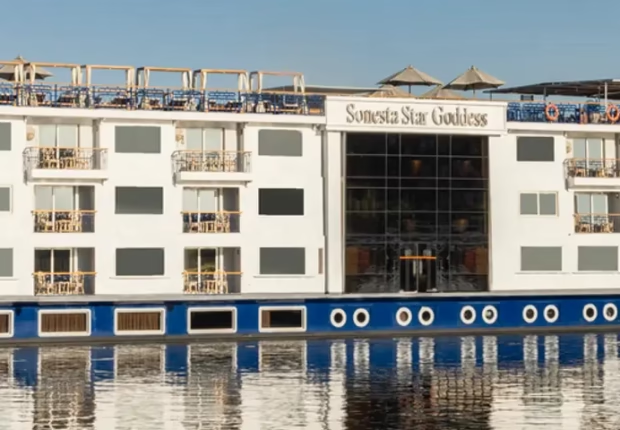
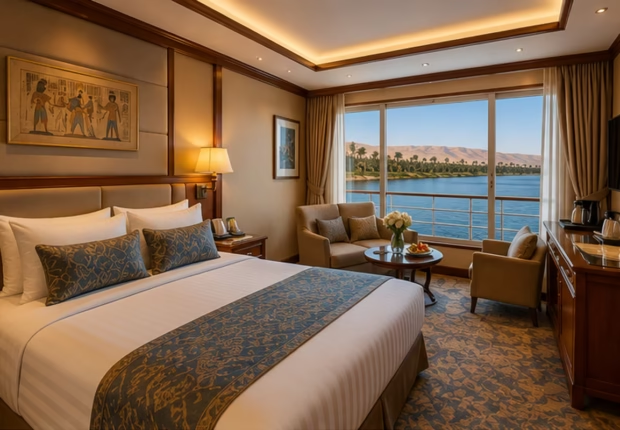
Cabin choice affects your trip more than ship category does, and it is the part of a booking most people leave to the operator. Four variables matter.
1. Deck level
Most Nile ships have three or four passenger decks. Upper decks have larger windows, better views over the bank, and more light. Lower decks sit close to the waterline, and the window is often a narrow strip set high in the wall.
The price difference between decks on the same ship is usually modest. It is the single best-value upgrade available.
2. Position along the ship
Engines are at the stern. Cabins directly above them are noticeably noisier and carry more vibration, particularly on northbound sailings working against the current.
Mid-ship is the quietest and most stable. If your operator lets you request a position, request mid-ship.
3. Window versus balcony
Most Nile ships have fixed picture windows that do not open. A minority of luxury vessels offer genuine step-out balconies.
A balcony changes the sailing days considerably, since much of the pleasure of the trip is watching the bank slide past. If you are on the river four nights and the budget stretches, it is worth more than a spa.
4. Size
Standard cabins run around 15 to 18 square metres. Deluxe around 18 to 22. Suites from 25 upward. Bathrooms are compact across all categories.
Size matters most if you are travelling with a lot of luggage or spending afternoons in the cabin during summer heat.
Questions to ask before confirming
- Which deck is the cabin on, and how many decks does the ship have?
- Is the window full size or a narrow upper strip?
- Does the window open?
- How close is the cabin to the engine room?
- Are twin beds convertible to a double, if that matters?
- Is there a fixed connecting-cabin option for families?
Sensible priorities
If your budget is limited, prioritise in this order: an upper deck first, mid-ship position second, then cabin size, then category. An upper-deck standard cabin is usually a better experience than a lower-deck deluxe one at a similar price.